Source Adult School Cosplay Costume for parties, events, and performances
Find 30 options for the Adult School Cosplay Costume from verified suppliers. Compare prices, MOQs, and shipping details for school uniform and anime styles.
Key considerations
Products List
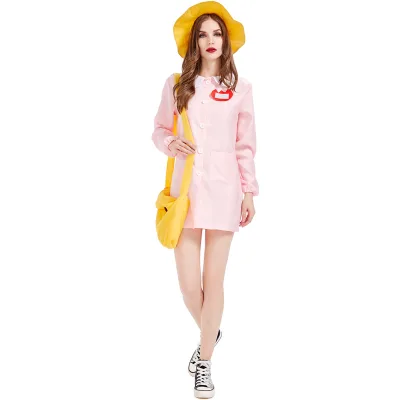
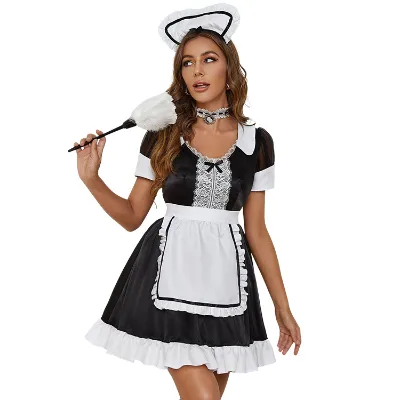
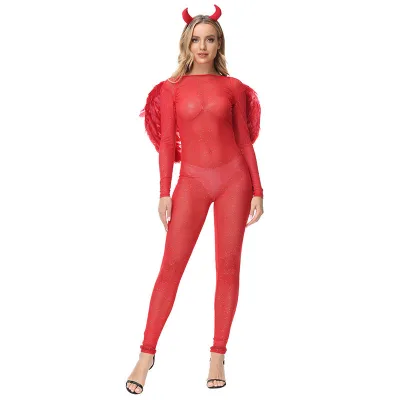
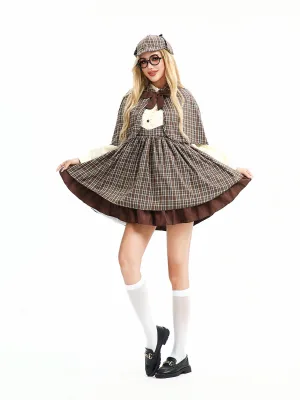
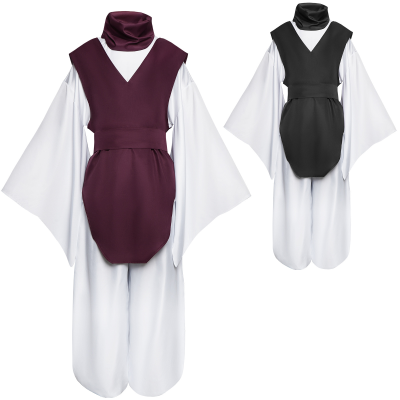
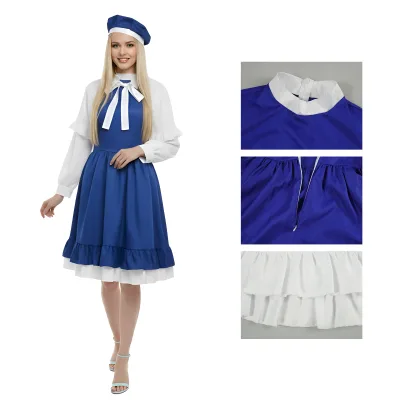


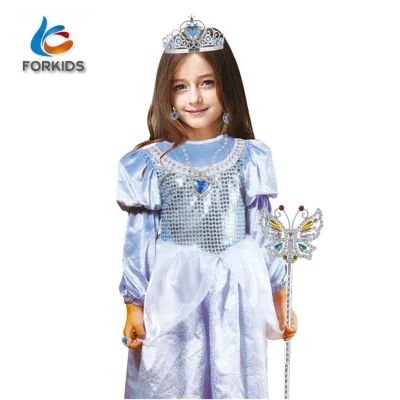


Good Quality Adult Blue Cartoon Cute Cosplay Mascot Costume for Event Party
$79.00 - $127.00
MOQ: 1 Pieces

Hot Sale High Quality Wearable Adult Plush Cute Fursuit Cats Cosplay Costume
$218.00 - $398.00
MOQ: 1 Pieces


Mask Halloween Cosplay Costume for Adult Mask for Halloween Game Party Costume
$0.10 - $8.00
MOQ: 500 Pieces



Comprehensive Sourcing Guide
Strategic Sourcing Guide for Adult School Cosplay Costumes
Understanding Product Attributes and Market Segmentation
The procurement of adult school cosplay costumes requires a precise understanding of the diverse product attributes available in the current market. Based on observed supply chain data, the category encompasses a wide spectrum of styles, ranging from standard school uniform costumes to more specialized interpretations such as sexy costumes and anime maid outfits. Buyers must recognize that "school cosplay costume" is not a monolithic product but a category containing distinct sub-types defined by specific character archetypes and design philosophies.
The observed product data indicates significant variation in target demographics and design intent. While some listings explicitly target the "Adults" age group with features like "Plus Size" and "Fancy Dresses," other entries within the same search context may list "KIDS" or "Women" as the primary gender, suggesting a need for rigorous filtering during the sourcing process. The material composition is predominantly polyester, with specific listings noting "100% Polyester" or generic "Polyester" blends. This material choice is critical for durability and cost-efficiency but requires verification regarding fabric weight and finish to ensure the costume meets the desired aesthetic, whether it is a realistic school uniform or a stylized anime character.
Furthermore, the classification of these items varies by "Costumes Type." The market data reveals entries categorized under "Sexy Costumes," "TV & Movie Costumes," and "Maid Costume Anime." This distinction is vital for compliance and marketing. A buyer seeking a costume for a general Halloween event might prioritize the "Halloween" holiday attribute, while a buyer sourcing for a specific cosplay convention might focus on the "Character Type," such as "Princess" or "Other." The presence of "Obscene Picture: No" in the data suggests that reputable suppliers generally adhere to content safety standards, but buyers must still verify that the final product design aligns with local regulations regarding modesty and appropriateness for the intended audience.
Technical Specifications and Material Verification
When evaluating the technical specifications of adult school cosplay costumes, buyers must scrutinize the model numbers, sizing, and packaging details to ensure logistical compatibility. The supply chain data presents specific model identifiers such as U5236, B2373, and 4283. These model numbers serve as unique identifiers for specific design iterations, which is essential for maintaining consistency in bulk orders. For instance, model U5236 is associated with a "school uniform costume" type, while B2373 is linked to a "Maid Costume Anime" type. Relying on these identifiers prevents the accidental procurement of a different style when reordering.
Sizing is another critical technical parameter. The observed data lists sizes ranging from S, M, L, XL to specific adult sizing. However, the "Single package size" varies significantly depending on the costume type, ranging from 35X25X2 cm for compact anime maid outfits to 55X35X10 cm for larger school uniform costumes. This variance directly impacts shipping costs and storage requirements. Buyers should calculate the volumetric weight based on these dimensions rather than just the single gross weight, which is observed between 0.800 kg and 1.000 kg per unit.
Material composition is a primary driver of quality and cost. The data confirms that polyester is the dominant material, often listed as "100% Polyester." While this material is cost-effective and durable, buyers must verify the specific weave and finish. Some listings mention "Components" such as "Dresses" or "Suits," indicating that the costume may be a multi-piece ensemble. For school uniforms, the inclusion of "Suits" as a component suggests a more formal cut, whereas "Dresses" may indicate a more casual or stylized approach. Buyers should request fabric swatches to verify the hand-feel and opacity of the polyester, ensuring it does not appear too cheap or transparent for the intended use.
Compliance, Certification, and Safety Standards
In the realm of costume procurement, compliance and safety are paramount, particularly when the target demographic includes adults who may be wearing the garments in public settings or for extended periods. The observed data includes a specific attribute stating "Obscene Picture: No," which indicates a baseline adherence to content safety. However, this is a self-declared attribute and does not replace formal safety certifications.
Buyers must verify that the costumes meet relevant textile safety standards for the destination market. While the supplied data does not list specific certification numbers, it is standard industry practice for polyester costumes to require compliance with flammability standards, such as those set by the Consumer Product Safety Commission (CPSC) in the United States or similar regulations in the European Union. These standards often dictate the burn rate of the fabric, which is particularly important for costumes that may be worn near open flames or heat sources during events like Halloween.
Additionally, the "Place of Origin" data shows products coming from Beijing, Fujian, and Zhejiang, China. These regions have varying levels of regulatory oversight and manufacturing maturity. Buyers should request documentation proving that the factory has undergone audits for labor practices and environmental compliance. Although the data does not explicitly mention certifications like ISO 9001 or Oeko-Tex, the absence of such claims in the provided facts means buyers cannot assume they are present. Instead, procurement teams should include a clause in their purchase orders requiring the supplier to provide proof of compliance with the destination country's textile safety regulations before shipment.
Cost Drivers and Pricing Dynamics
The pricing of adult school cosplay costumes is influenced by several factors, including material quality, design complexity, and order volume. The observed price range in the market spans from $0.10 to $2,399.00 USD. This wide disparity indicates that the category includes both low-cost, mass-produced items and high-end, custom-designed pieces. The lower end of the spectrum likely represents basic polyester costumes with minimal detailing, while the higher end may involve intricate designs, premium fabrics, or extensive customization.
The Minimum Order Quantity (MOQ) is a significant cost driver. The data shows an MOQ range from 1 piece to 500 pieces. For buyers testing the market, the ability to order single items or small batches (e.g., 2 PCS) is advantageous, though the unit cost will be higher. Conversely, larger orders benefit from economies of scale. The data also highlights an "OEM MOQ" of 200 pieces, suggesting that suppliers are willing to offer custom branding and design changes at this volume threshold. Buyers should calculate the total landed cost, including shipping and duties, rather than focusing solely on the unit price.
Shipping methods also impact the final cost. The observed data lists multiple shipping options, including DHL, EMS, UPS, FedEx, sea freight, and air freight. For urgent orders, air freight is necessary but expensive. For bulk orders where lead time is less critical, sea freight offers significant savings. The "Delivery time" is observed to be 7-15 days for sample orders, with a specific mention of "7 days sample order lead time" support. Buyers should factor these lead times into their project planning to avoid delays, especially if the costumes are needed for a specific event like Halloween.
Supplier Evaluation and Operational Capabilities
Evaluating suppliers for adult school cosplay costumes requires a multi-faceted approach that goes beyond price comparison. The supply data indicates that suppliers are located in major manufacturing hubs in China, including Beijing, Fujian, and Zhejiang. These regions are known for their textile and garment industries, but the specific capabilities of each factory can vary. Buyers should assess the supplier's ability to handle different "Costumes Types," such as transitioning from standard school uniforms to anime maid costumes, which may require different pattern-making skills.
The "Supply Type" is listed as "In-Stock Items," which suggests that some suppliers maintain inventory for immediate shipment. This is beneficial for buyers with tight deadlines. However, for custom orders, the "OEM MOQ" of 200 pieces becomes relevant. Buyers must determine if the supplier can meet their volume requirements within the specified lead times. The data mentions a "7 days sample order lead time," which is a positive indicator of responsiveness. Buyers should test this by ordering samples to evaluate the quality of the workmanship and the accuracy of the size charts.
Payment terms are another critical aspect of supplier evaluation. The observed data lists payment methods such as TT (Telegraphic Transfer), Trade Assurance, Western Union, and MoneyGram. Trade Assurance is particularly valuable as it offers protection against non-delivery or quality issues. Buyers should prioritize suppliers who offer Trade Assurance or similar secure payment mechanisms. Additionally, the "Packaging Details" vary, with options including polybags, PVC bags with hangers, and long Opp bags. Buyers should specify their preferred packaging to ensure the costumes arrive in good condition and are ready for retail display.
Quality Control and Long-Term Procurement Strategy
Implementing a robust quality control (QC) strategy is essential for maintaining the integrity of the Adult School Cosplay Costume line. Given the variation in "Single gross weight" and "Single package size," buyers should establish clear acceptance criteria for the final product. This includes verifying the material composition, ensuring the "Color" matches the provided samples (noting that some listings show multiple colors like 2, 3, or specific shades like Brown), and checking for defects in stitching and finishing.
For long-term procurement, buyers should focus on building relationships with suppliers who demonstrate consistency in quality and reliability. The data shows that some suppliers support sample orders with a 7-day lead time, which is a good foundation for establishing a partnership. Buyers should consider negotiating a framework agreement that locks in pricing and lead times for repeat orders, especially if the "OEM MOQ" of 200 pieces is met. This can help stabilize costs and ensure a steady supply of costumes for recurring events or seasonal peaks like Halloween.
Furthermore, buyers should monitor the "Components" of the costumes, such as "Dresses" and "Suits," to ensure that all parts are included and of high quality. Missing components or poor-quality accessories can ruin the overall look of the costume. Regular QC inspections, either on-site or through third-party agencies, can help identify issues before the products leave the factory. By maintaining a disciplined approach to quality control and supplier management, buyers can ensure a steady supply of high-quality adult school cosplay costumes that meet the demands of their customers.
Final Considerations for Procurement Success
In conclusion, sourcing adult school cosplay costumes involves navigating a complex landscape of product attributes, technical specifications, and supplier capabilities. The observed data provides a solid foundation for understanding the market, but buyers must exercise due diligence to verify claims and ensure compliance. By focusing on material quality, verifying safety standards, and establishing clear communication with suppliers, buyers can successfully procure costumes that meet their specific needs. The wide range of options, from basic school uniforms to elaborate anime costumes, offers ample opportunity for differentiation in the market. However, success depends on a strategic approach that balances cost, quality, and lead time to deliver value to the end consumer.
FAQs
What materials are used for adult school cosplay costumes?
These costumes are primarily made from 100% polyester or generic polyester blends. This material choice ensures durability and cost-efficiency while allowing for various fabric finishes to meet specific aesthetic requirements.
Can I order single items or small batches?
Yes, you can order single items or small batches as the minimum order quantity starts at one piece. Some listings also support orders as low as two pieces, allowing for market testing before committing to bulk purchases.
How long does it take to receive a sample order?
Sample orders typically have a lead time of seven days. This quick turnaround supports buyers who need to verify quality and design details before proceeding with larger production runs or custom branding.
Which packaging options are available for these costumes?
Suppliers offer multiple packaging methods including polybags, PVC bags with hangers, and long Opp bags. These options ensure the costumes arrive in good condition and are ready for retail display or direct shipping.
What is the minimum order quantity for custom branding?
The minimum order quantity for OEM custom branding is 200 pieces. This threshold allows suppliers to offer custom design changes and branding while maintaining cost-effectiveness for the buyer.
Which sizes are available for these school uniform costumes?
Available sizes typically include S, M, L, and XL, with some listings also specifying adult sizing. Buyers should verify specific size charts as dimensions can vary between different costume types and manufacturers.